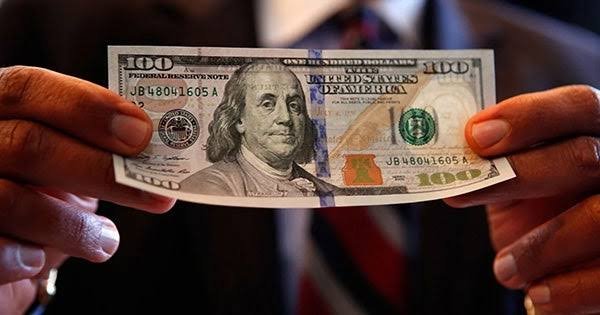
Starting a side hustle with $100 is entirely possible, but the most useful question is not what you can buy with $100. It is what kind of business lets you learn whether people will pay you before that money disappears.
This distinction matters because many side hustles are described as “cheap to start” when they are only cheap at the very beginning. A dropshipping store may cost relatively little to open, but advertising, samples, software, returns and failed product tests can quickly push the real cost much higher. Photography may appear inexpensive if you already own professional equipment, but that does not make it a genuinely low-cost option for a beginner. The same is true of vending machines, laser engraving, food businesses and other opportunities where the headline startup cost leaves out the assets required to operate properly.
For this guide, we are using a more practical definition. A side hustle belongs here if someone could realistically begin looking for customers, complete the first few paid jobs and learn whether there is demand without immediately needing substantially more than $100.
Under that definition, the strongest options tend to be service businesses, small-scale reselling and selected digital products. They may not sound as exciting as launching a brand or building an online store, but they give you something more valuable at the beginning: a cheap way to test demand.
The Best Use of $100 Is Usually to Preserve It
There is a tendency to treat startup capital as money that should be spent, almost as though using the full amount proves that the business is taking shape. That is rarely necessary.
If you can find your first customer after spending $15, keeping the other $85 is a better outcome than searching for additional things to buy. Early businesses are full of assumptions about what customers want, how much they will pay, how long a job will take and which tools will actually be necessary. The less money tied up before those assumptions are tested, the easier it is to adjust.
This is why we would generally avoid spending an initial $100 on branding, premium software, elaborate websites or online courses unless one of those things is directly stopping you from getting paid. A simple service business can often begin with equipment you already own, a clear description of what you offer and a way for interested customers to contact you.
If the business begins to generate revenue, that money can pay for better software, additional supplies or more professional branding later. At that point, the spending is being guided by actual demand rather than guesswork.
Start With Skills and Assets You Already Have
A $100 budget becomes much more useful when it is combined with something you already know.
Someone who has spent several years teaching mathematics is in a strong position to start tutoring without buying much at all. A person who regularly maintains WordPress sites can offer website support services without first paying for technical training. A board game collector may already know which titles hold their value and which seemingly “rare” games are difficult to sell. Someone who keeps dozens of houseplants may be able to offer plant-sitting or repotting services with very little additional expense.
These existing advantages matter because they reduce both the financial cost and the learning curve.
Before choosing a side hustle, we would write down the skills you already use at work, the hobbies you understand unusually well, the tools or equipment you already own and the things people regularly ask you for help with. That list is often more useful than searching for the cheapest side hustle on the internet because it shows where you already have an advantage that somebody else may need to spend months or hundreds of dollars developing.
Freelance Services
Freelance services remain one of the most practical categories for someone starting with very little money because the product is usually your time and expertise rather than physical inventory.
Writing, editing, bookkeeping, graphic design, virtual assistance, website maintenance and content management can all be offered with relatively low upfront spending if you already have the relevant skills. The bigger challenge is that broad freelance categories are highly competitive, so a more specific service is often easier to sell.
Instead of advertising yourself as a general virtual assistant, you might offer to upload and format product listings for Shopify stores. Instead of selling generic WordPress support, you could specialise in cleaning up old blog posts, fixing broken formatting and publishing new articles for businesses that already have a website but rarely maintain it. A restaurant might not be looking for a “digital consultant”, but it may happily pay someone to update its website menu, opening hours and photographs.
That kind of specificity makes the offer easier for the customer to understand and easier for you to price. It also means you can test the idea without spending much beyond what you already use.
The downside is that the first customer can take time to find. Freelancing is inexpensive to start precisely because the barrier to entry is low, which means plenty of other people can offer similar services. The real work is identifying a customer who has a clear problem, presenting a straightforward solution and proving that you can deliver it reliably.
Tutoring
Tutoring is another side hustle where a small budget can go a long way because the main asset is subject knowledge.
If you already know mathematics, science, languages, music or exam preparation well enough to teach another person, you may not need much more than suitable teaching materials and a way to find students. Online tutoring reduces the logistical cost further because there is no need to rent a physical space or travel between lessons.
The appeal is that the path to revenue is easy to understand. One student can become your first paying customer, and you do not need hundreds of website visitors or months of content before discovering whether somebody values the service.
Tutoring does have limitations. It is mainly an exchange of time for money, and there is a natural ceiling on how many lessons you can teach around another job. Still, that does not make it a poor side hustle. Someone looking for an extra few hundred dollars a month may care much more about predictable demand than about whether the business can eventually become passive.
With a $100 budget, we would put very little money into the launch itself. The priority should be finding the first students and learning which age group, subject or type of support you are best suited to offer.
Pet Sitting and Dog Walking
Pet sitting and dog walking are often inexpensive to start because customers are largely paying for reliability, trust and responsible care rather than expensive equipment.
That does not mean the work should be treated casually. Depending on where you live and the service you provide, you may need to think about insurance, registration or local regulations. You are also being entrusted with someone’s pet and, in many cases, access to their home.
What makes this interesting as a low-cost business is the possibility of recurring customers. A dog owner who needs help every Tuesday and Thursday is more valuable than repeatedly finding one-off bookings, and a pet-sitting customer who travels several times a year may return if they trust you.
The economics also depend heavily on geography. A customer five minutes from your home is very different from one who requires a 45-minute journey each way. The headline fee may look identical, but the real hourly return is not.
For that reason, we would keep the service area small at the beginning and focus more on building local trust than on trying to cover an entire city.
Plant Sitting and Houseplant Services
Plant sitting is a narrower opportunity, but it fits well within a small budget because there is very little equipment required if you already understand basic plant care.
People who own a substantial collection of houseplants may need someone to water, check and maintain them while they are travelling. This becomes particularly useful for owners of more expensive or demanding plants that cannot simply be left unattended for two weeks.
We would not expect plant sitting alone to produce a large or consistent monthly income, because the need is naturally occasional. It becomes more interesting when combined with related services such as repotting, plant maintenance or holiday home visits.
That combination is a good example of how a side hustle can expand gradually. There is no need to launch with six services. Start with one simple offer, see what customers actually ask for, and add the adjacent services that make sense.
Cleaning Services
Cleaning is one of those side hustles that often looks less exciting than newer online opportunities, but the business model is much easier to understand.
People already know why they might hire a cleaner, and the initial equipment cost can be kept relatively low, especially if clients prefer you to use products they already own. What matters more is how the jobs are scheduled and where customers are located.
A single cleaning job on the other side of the city may look profitable until travel time is included. Several regular customers in the same neighbourhood create a much stronger operation because less of the day is spent moving between jobs.
Recurring bookings are particularly valuable. If a customer wants the same service every week or fortnight, you are no longer starting from zero each month.
Cleaning is physically demanding and not particularly scalable without hiring additional people, but for someone whose goal is straightforward part-time income rather than building a large company, that may be perfectly acceptable.
Reselling
Reselling can fit comfortably into a $100 budget, but we would be very cautious about spending the entire amount on stock before understanding the market.
The simplest way to learn is to begin with things you already own. Selling a few unused books, clothes, games or household items teaches you how listings work, what buyers ask about, how much platforms charge and how much effort goes into packaging and delivery.
Only after that would we start buying products specifically to resell.
The strongest resellers usually have knowledge in a particular category. Someone who understands board games, watches, handbags, vintage toys or electronics has a better chance of recognising an undervalued item than somebody who simply looks for anything marked “clearance”.
The important number is not the difference between purchase price and selling price. Marketplace fees, payment fees, shipping, packaging, returns and time all reduce the final margin.
An item bought for $10 and sold for $25 can still be a poor flip if the costs and effort between those two numbers are ignored.
Furniture Flipping
Furniture flipping can be started cheaply because unwanted furniture is often sold for very little or given away completely.
The practical constraints tend to be more important than the purchase price. You need transport, somewhere to store the piece and enough room to repair or refinish it if necessary. Larger items may also take longer to sell, which means your money and storage space can remain tied up.
We would begin with one piece rather than buying several because they appear cheap.
That first item will tell you a lot. You will learn what materials cost, how long the work takes, what styles attract buyers and whether your local resale market is active enough to make the effort worthwhile.
If the item sells quickly and produces a reasonable margin, buy another. If it sits unsold for weeks, you have discovered something useful without turning your garage into a warehouse.
Lesson Plans and Curriculum Resources
Teachers and tutors can sometimes start a digital-product side hustle with very little financial investment because they may already have useful material.
Worksheets, lesson plans, revision packs, slide decks and classroom activities can potentially be packaged and sold through education marketplaces or an independent store. The main advantage is that the same product can be sold repeatedly without needing to recreate it for each customer.
That said, we would not treat this as an easy passive-income business.
Educational marketplaces are crowded, and teachers can now create basic worksheets and questions quickly using AI tools. Generic resources therefore have less of an advantage than they once did.
The stronger opportunity lies in material that reflects actual teaching experience. If you have spent several years improving an activity because students repeatedly struggled with the same concept, that resource has a reason to exist beyond simply filling another marketplace listing.
You should also check that you have the right to sell any material created as part of your employment and make sure that images, illustrations or excerpts from third parties are properly licensed.
Digital Templates
Digital templates are another low-cost option because they require no physical inventory, but they suffer from the same problem as most inexpensive digital products: creating the file is easy, finding something people genuinely want is harder.
A generic planner or spreadsheet may compete with thousands of similar products. A more specialised template can be much more useful.
For example, a financial tracker designed specifically for freelance photographers could help users monitor deposits, equipment costs and outstanding invoices. A project planner created for wedding vendors might solve a very different set of problems from a general productivity template.
We would therefore begin with the customer problem rather than the product format. “I want to sell a spreadsheet” is not much of a business idea. “Small event photographers need a better way to track project payments” is more useful because it tells you who the customer is and what the product is supposed to fix.
Small-Business Micro-Services
This is one of the categories we would look at most closely if the goal were to start with almost no money.
Small businesses constantly have administrative and digital tasks that are important enough to be annoying but too small to justify hiring another employee.
Product listings need uploading. Menus need updating. Broken links need checking. Old blog posts need formatting. Spreadsheets need cleaning. Images need resizing. Business information needs correcting.
These jobs are not glamorous, but glamour is irrelevant if someone is willing to pay.
A tightly defined service can often be easier to sell than a broad consultancy because the customer knows exactly what will happen. “I will update your website menu and replace the outdated photographs for $120” is a much clearer proposition than “I help businesses with digital growth”.
A simple service like this can also become recurring work. Once a business trusts you with one task, there may be similar work every month.
What We Would Actually Spend the $100 On
The answer depends on the business, but in most cases we would spend as little as possible until a customer appears.
A cleaner may need a few supplies. A pet sitter may need to consider appropriate insurance. A reseller may eventually need packaging materials. A freelancer may decide that a simple domain and professional email address improve credibility.
What we would not do is spend the whole budget simply because it exists.
The money should follow the first signs of demand. If customers repeatedly ask for something you cannot currently provide, then spending becomes easier to justify. If no one is interested in the offer, the fact that you have already invested $100 does not make the business more viable.
Keeping part of the budget untouched gives you room to change direction.
What We Would Avoid With Only $100
We would be cautious about any business where the first $100 is only a small deposit on much larger costs.
Inventory-heavy ecommerce, specialist manufacturing, franchises and businesses dependent on paid advertising generally do not fit comfortably within a strict $100 budget.
There are exceptions if you already own the necessary equipment, but those should be described honestly.
Someone with a professional camera may be able to start offering photography services without spending much additional money, but that does not make photography an inexpensive business for a beginner. Someone who already owns a laser engraver has a very different starting point from someone who needs to buy the machine first.
The same logic applies to home-based food businesses, beauty services and anything involving significant licensing, safety or insurance requirements.
Be Careful When the Opportunity Wants Your Money First
Low-cost side hustles are also an area where scams frequently appear because the amount requested can feel small enough to seem plausible.
The distinction we would make is between paying for something the business genuinely needs and paying someone for access to the supposed opportunity.
Buying cleaning supplies because you already have a customer is understandable. Sending money to an unknown recruiter because you have supposedly unlocked a higher-paying batch of tasks is not.
Similarly, we would be cautious about jobs that require you to buy expensive starter kits, training or software directly from the same person promising that you will earn money afterwards.
When your total budget is only $100, protecting it matters just as much as deciding how to spend it.
How to Choose Between Several Cheap Side Hustles
Startup cost should not be the only factor.
If one side hustle costs $20 to begin but takes six months to produce the first customer, while another costs $80 but has a realistic chance of generating revenue within two weeks, the second opportunity may be much stronger.
We would also look at how much time the work requires, how difficult it is to find customers, whether those customers can become recurring, how much competition exists and whether the work suits your existing skills.
A business that looks good on paper can still be a bad fit.
Someone who hates interacting with customers probably should not choose a highly personal local service simply because it has a low startup cost. Someone who already has strong design skills may have little reason to start dog walking when those same skills could be sold for a higher hourly rate.
The cheapest side hustle is not automatically the best one.
What We Would Do First
If we had $100 and wanted to test a side hustle this weekend, we would choose one thing we already know how to do and turn it into one simple offer.
That might be tutoring one specific subject, formatting WordPress posts for small businesses, walking dogs within one neighbourhood, repotting houseplants or reselling a category of products we already understand.
Then we would try to get one paying customer.
That first transaction is more informative than a month spent preparing for launch because it tells you whether people actually want the service, whether your price makes sense, how long the work takes and what customers ask for once they begin paying attention.
The goal at this stage is not to build a polished business.
It is to get evidence.
Frequently Asked Questions
What is the best side hustle to start with $100?
Service-based side hustles are often the easiest to test because they require relatively little inventory. Freelance services, tutoring, cleaning, dog walking, pet sitting and other local services can all potentially be started within a small budget if you already have the necessary skills.
Can I start a side hustle with no money?
Some services can be started without additional spending if you already own the equipment and software required. Freelance work, tutoring and certain digital services are possible examples, although ongoing costs may appear once the business grows.
What online side hustle can I start with $100?
Freelance services, digital templates, teaching resources and certain forms of online tutoring can all be started relatively cheaply. Content-based businesses can also have low financial startup costs, although they may take considerably longer to generate income.
Is $100 enough to start reselling?
Yes, but we would begin by selling items you already own before spending the full budget on inventory. This gives you a chance to learn how selling platforms, shipping, fees and buyer behaviour work without putting the entire $100 at risk.
Should I build a website before starting?
For many small side hustles, no. A website can help later, but the first priority should usually be validating the offer. Marketplaces, referrals, local groups and direct outreach may be enough to find your first customers.
How quickly can a side hustle make money?
Service businesses can sometimes generate income as soon as the first customer is found, while digital products and content businesses may require more time to build visibility. Startup cost and time to first income should therefore be considered separately.
Should I spend the whole $100?
There is no reason to. If you can test your idea after spending $20, keep the remaining money until you know what the business actually needs.
SmartSideGig Editorial Verdict
A $100 budget is enough to start a side hustle, but it is not enough to absorb many expensive mistakes. That makes the order in which you spend the money unusually important.
We would choose an opportunity where the first customer can arrive before most of the budget has been committed, which is why service businesses, specialised freelancing, tutoring, small-scale reselling and carefully chosen digital products feature so strongly in this guide.
The common thread is not simply that they are cheap. It is that they can be tested cheaply.
That distinction matters because the most important information at the beginning is whether someone will actually pay. Once that happens, the business becomes easier to evaluate. You can see how long the work takes, what the real costs are, whether customers come back and whether there is enough margin to justify continuing.
If there is no demand, you can move on without having lost much money.
If there is demand, the first revenue can pay for the next stage.
With a limited budget, that is the position we would want to be in.
How SmartSideGig Approached This Guide
For this article, we focused on side hustles where a beginner could realistically begin testing demand while keeping initial out-of-pocket spending around $100 or less. We considered more than the advertised startup cost, including whether additional spending would immediately be required, how quickly the business could plausibly reach a first customer, whether ongoing expenses are significant and whether someone can begin using skills or assets they already own.
We have deliberately avoided assigning guaranteed monthly earnings to these ideas because results vary too widely by location, skill, pricing, competition and time commitment to make a single figure meaningful.
The goal of this guide is therefore not to identify the side hustle with the most impressive income claim. It is to identify the types of businesses that give someone with a small budget the best chance to test a real market without putting much money at risk.
0 community comments